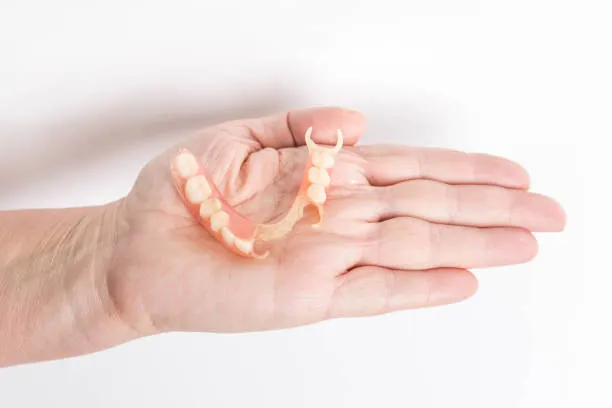
Losing a few teeth—whether due to age, an unexpected injury, or localized dental issues—presents a crossroads for your oral health. While it can be tempting to ignore a gap that sits toward the back of your mouth, leaving empty spaces vacant triggers a highly destructive chain reaction. Your remaining natural teeth rely on one another for mutual structural support; when a gap appears, neighboring teeth naturally begin to tip, drift, and migrate into the empty space.
This shifting rapidly misaligns your bite, induces pain in the jaw joints (TMJ disorders), and creates plaque-trapping pockets that cause gum disease around your healthy teeth.
Fortunately, custom-engineered partial dentures serve as your smile's ultimate defensive shield. They restore your full chewing power, seamlessly fill aesthetic gaps, and actively lock your remaining natural teeth in place to preserve your jaw infrastructure.
Understanding Your Advanced Options for Partial Dentures
At the Saanich Walk-In Denture Clinic in Victoria, we do not believe in mass-produced, uncomfortable prosthetics. Conrad DePalma meticulously evaluates your remaining dentition to recommend the ideal material framework for your specific biomechanical needs:
Cast Metal Partial Dentures
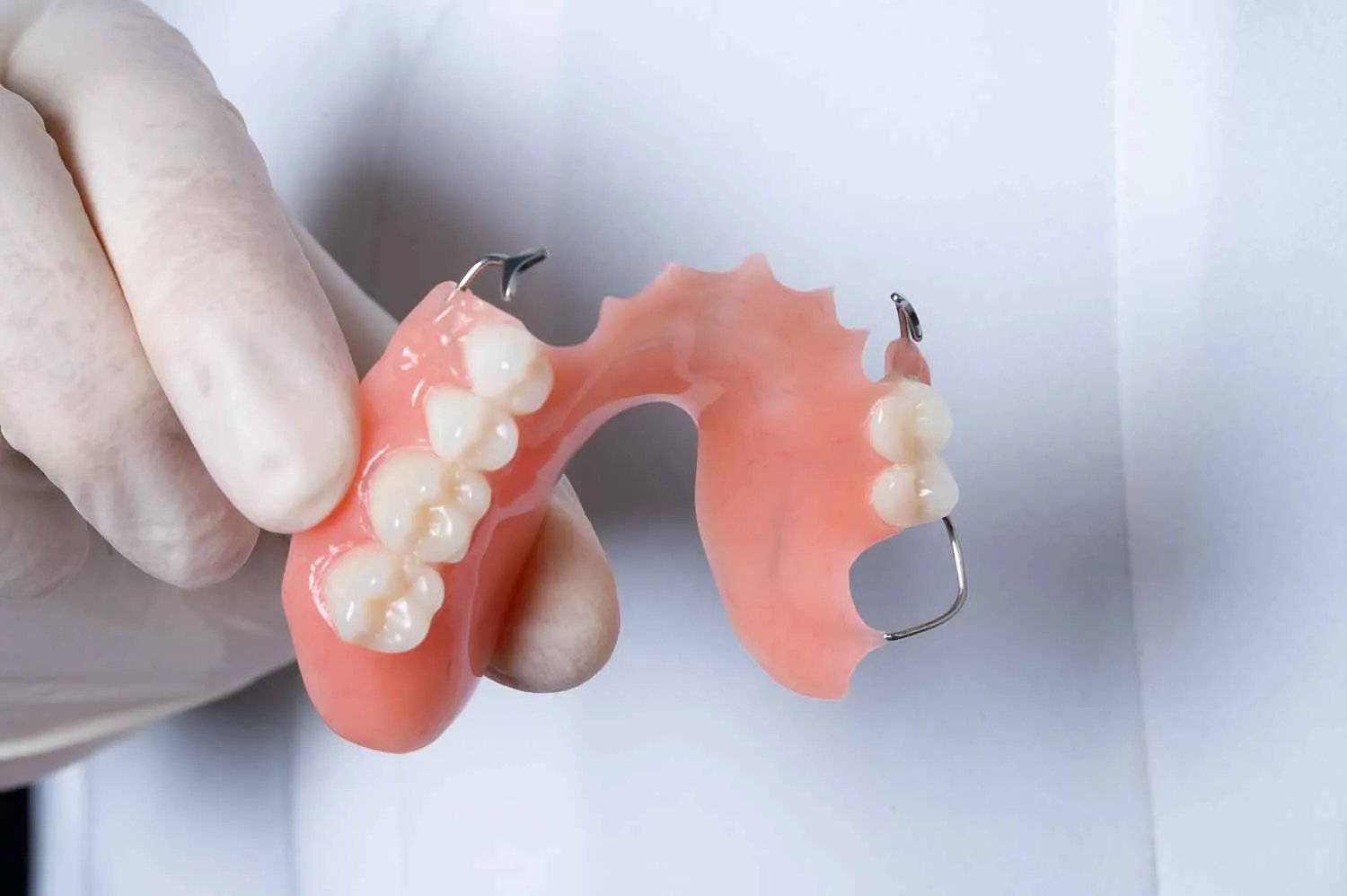
Considered the absolute gold standard of restorative dentistry, these feature a rigid, ultra-thin framework of medical-grade chrome-cobalt alloy. They are incredibly strong, clip securely onto anchor teeth, and distribute chewing forces evenly across your jaw without warping.
Flexible Partial Dentures
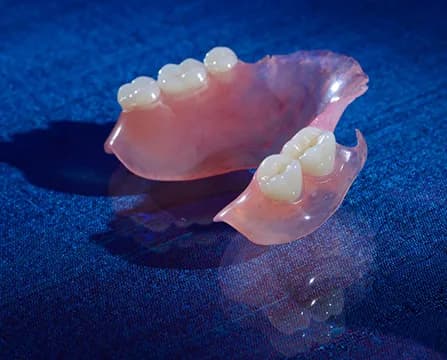
For patients prioritizing an entirely metal-free look, flexible partials are crafted from advanced, lightweight thermoplastic polymers. The retention clasps are tinted to match your natural gum tissue perfectly, making the appliance virtually invisible while flexing naturally with the movements of your mouth.
Transitional Acrylic Partials
Commonly referred to as "flippers," these are cost-effective acrylic plates designed primarily for short-term or transitional use, ensuring you never have to navigate a social event with a missing front tooth while waiting for long-term treatments.
The Art and Science of a Precision Fit
A poorly designed partial denture can act like an orthodontic appliance in reverse—putting destructive leverage on your remaining natural teeth and rocking them loose over time. This is why choosing an experienced practitioner is paramount.
With more than 25 years of specialized lab and clinical experience, our team designs your partial dentures with mathematical precision. We balance the load flawlessly between your soft gum tissue and your solid anchor teeth, ensuring your appliance feels entirely stable whether you are speaking to a crowd or enjoying a meal.
Partial Dentures: Frequently Asked Questions (FAQ)
How do partial dentures stay securely inside my mouth?
Partials utilize custom-designed, low-profile metal or gum-colored flexible clasps that gently wrap around your remaining natural teeth, acting as secure anchors without damaging your enamel.
Will wearing a partial denture make my other teeth loose?
If designed and engineered by an expert denturist like Conrad DePalma, absolutely not. A precision-engineered partial balances and distributes chewing forces evenly, which actually protects your remaining teeth from excessive wear.
Can you add a new tooth to my existing partial if I lose another natural tooth?
In many cases, yes! If you have a cast metal or acrylic partial, our on-site Victoria laboratory can quickly modify the frame and add a matching new prosthetic tooth, saving you the expense of a full replacement.
Is it difficult to learn how to speak with partial dentures?
Most patients adapt within days. Because our cast metal partials are designed to be incredibly thin, they cause minimal interference with your tongue movements.
Should I wear my partial denture when I go to sleep?
We strongly advise removing your partials before bed. This allows your gum tissues to breathe, prevents bacterial or fungal buildup, and protects your natural anchor teeth from nocturnal grinding forces.
How do I clean my partial denture safely?
Remove the partial and rinse it thoroughly after meals. Brush it daily with a specialized soft-bristled denture brush and a non-abrasive denture paste. Never use standard toothpaste, as its abrasive particles can scratch the acrylic.
Can I eat crunchy or tough foods with a partial denture?
Yes! Once the initial adjustment period passes and any minor sore spots are resolved, your partial will fully restore your chewing capacity, allowing you to enjoy a complete, healthy diet.
How much do custom partial dentures cost in Victoria, BC?
The cost depends strictly on the style of framework selected (metal, flexible, or acrylic) and the number of teeth being replaced. We offer totally free consultations and provide a complete, transparent fee breakdown upfront.
Are your partial denture options covered by the CDCP?
Yes. Partial dentures are a core covered service under the Canadian Dental Care Plan. Our administration team handles all pre-authorizations and electronic billing directly.
How often will my partial require adjustment or replacement?
On average, a high-quality partial lasts 5 to 7 years. Over time, your natural jaw structure changes, or your anchor teeth may shift slightly, requiring a professional reline or adjustment to maintain a perfect seal.
Protect Your Remaining Teeth
Don't let empty gaps dictate your health or compromise your remaining teeth. Explore our lightweight, ultra-durable partial dentures customized directly for your unique smile. Walk into our Shelbourne Street clinic today or contact us online to set up your free, comprehensive consultation! You can also learn more about our partial denture services in Victoria.